Home equity can give you options, but choosing how to use it takes more than estimating your home’s value. You’ll want to compare the cost, payment structure, and risks of each approach, and how they fit with your current mortgage and plans.
Two options in GNB Mortgage’s Encore Series are OpenARM, an adjustable-rate mortgage, and CashLine, a home equity line of credit, or HELOC. They work differently: OpenARM is a mortgage loan with an adjustable rate, while CashLine is a credit line secured by your home. Either may be worth exploring, depending on your goals and eligibility.
Northern Virginia equity, and the rate context
Northern Virginia home values can make equity a significant part of a homeowner’s finances. The Northern Virginia Association of Realtors’ September 2026 report reported a regional median sold price of $744,950. That figure is a broad market measure, not an estimate of what any particular home is worth. Your equity depends on your home’s current value, mortgage balance, and any other liens.
For context, Freddie Mac reported a national average 30-year fixed mortgage rate of 7.24% for the week ending October 29, 2026. That is a benchmark, not a quote for your loan, an ARM, or a HELOC. Your available rate depends on the product and your circumstances.
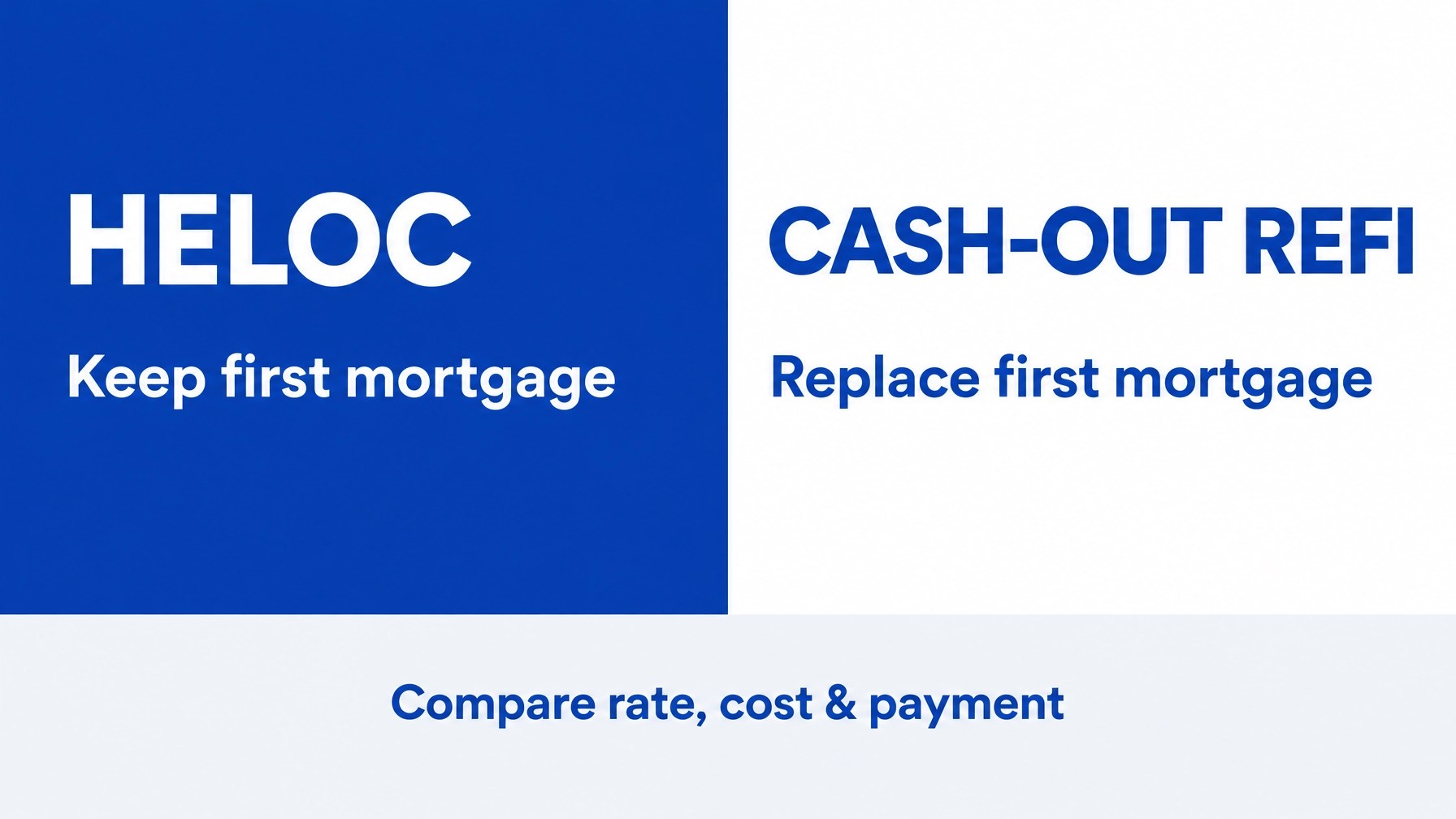
HELOC or cash-out refinance: What’s the difference?
A HELOC is a revolving credit line secured by your home. If approved, you can borrow up to a set limit during a draw period, repay funds, and potentially borrow again during that period. You generally pay interest on the amount you use, not the full credit limit.
A cash-out refinance replaces your existing mortgage with a new, larger mortgage. The new loan pays off the old balance, and you receive some of the difference in cash, subject to the loan terms, costs, and eligibility.
The choice can matter especially if your current first-mortgage rate is lower than today’s rates. With a HELOC, you may be able to access some equity while keeping that first mortgage in place. A cash-out refinance, by contrast, reprices the full mortgage balance under the new loan terms. But a HELOC adds a second lien and payment, and its rate may change.
| Consideration | HELOC | Cash-out refinance |
|---|---|---|
| Existing first mortgage | Usually stays in place | Is replaced by the new loan |
| How you receive funds | Draw from a credit line as needed | Receive cash from the loan proceeds |
| Rate structure | Often variable; product options differ | Fixed or adjustable, depending on the loan |
| Costs to compare | Fees and interest on the amount used | Refinance costs and interest on the new loan |
| Payment planning | Consider draw-period and repayment-period payments | Consider the new payment, term, and total borrowing cost |
Neither option is automatically better. A HELOC may suit a planned expense where borrowing in stages is useful; a refinance may be worth comparing if changing the first mortgage is part of your goal. I recommend looking at the full cost and payment, not only the rate or cash available.
How CashLine works
GNB’s CashLine HELOC is part of the Encore Series. The product information describes fixed- and adjustable-rate choices, a 10-year interest-only draw period, and a 30-year term. It also describes maximum combined loan-to-value (CLTV) levels of up to 95% for a primary residence and 80% for a second home or investment property. These are product limits, not approval guarantees. Your available line and terms depend on underwriting, existing liens, property type, and other requirements.
During an interest-only draw period, the required payment may cover interest without reducing the principal balance. That can make the early payment lower than a principal-and-interest payment, but it does not make the borrowed amount disappear. When the draw period ends, your payment may rise as you repay principal, and a variable rate can also change your costs.
Before applying, ask for a payment illustration that shows both the draw period and the repayment period. If fixed-rate options or the ability to convert part of a balance to a fixed rate are available for your selected plan, compare their terms and costs too.
Understanding OpenARM and adjustable rates
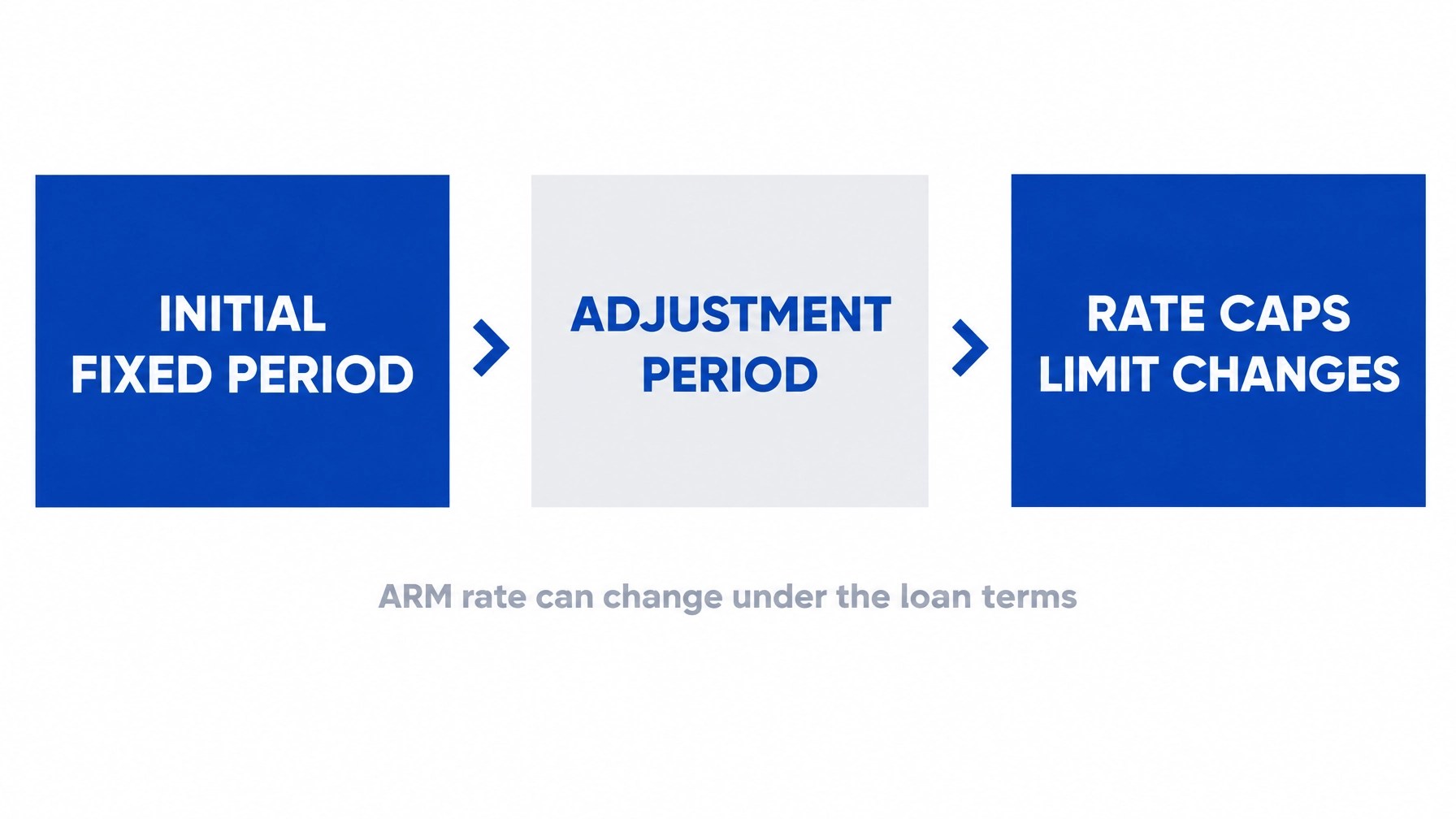
GNB’s OpenARM product information describes 5/6 and 7/6 ARM options. In general, the first number refers to the years in the initial fixed-rate period; the second refers to how often the rate can adjust afterward, in these examples, every six months. Always confirm the schedule and definitions in the specific loan disclosures.
An adjustable-rate mortgage usually starts with an initial rate period, then adjusts according to the loan agreement. The rate commonly reflects an index plus a lender-set margin. When the index changes, the rate, and potentially your payment, may change, subject to the loan’s terms.
Rate caps limit how much the interest rate can change at certain points. Ask about:
- Initial adjustment cap: The maximum change at the first adjustment.
- Periodic adjustment cap: The maximum change at each later adjustment.
- Lifetime cap: The maximum change over the life of the loan.
Caps reduce uncertainty but do not prevent a payment increase. Ask the lender to show how your payment could look at the first adjustment and at the maximum rate allowed under the contract. The Consumer Financial Protection Bureau’s ARM rate-cap guide explains these protections in more detail.
A fixed-rate mortgage keeps its rate unchanged for the loan term, providing more predictable principal-and-interest payments. An ARM loan can offer a different initial rate structure, but you need to be comfortable with the adjustment schedule and possible future payments. The right comparison depends on how long you expect to hold the loan, your budget, and how much payment stability matters to you.
A practical way to compare your options
Before deciding how to use equity, write down your goal: for example, funding a project, managing a major expense, or changing your current mortgage. Then compare offers using the same assumptions.
- Review your current mortgage. Note its rate, remaining balance, monthly payment, and years left. If your rate is low, include the cost of replacing it in a cash-out refinance comparison.
- Estimate the amount you need. Borrowing only what you need may help limit interest costs and preserve more equity.
- Compare total payments. For a HELOC, include the payment after the draw period. For an ARM, model possible adjustments, including the highest payment permitted by the terms.
- Review costs and terms. Ask about fees, repayment rules, rate indexes and margins, caps, and any conditions that apply.
- Consider your plans. How long you expect to stay in the home, keep the loan, or use the credit line can affect which trade-offs matter most.
Home equity borrowing uses your home as collateral. If you cannot make the payments, you could put the home at risk. Be especially thoughtful if you plan to use secured debt to pay off other balances; a lower initial payment may not mean a lower total cost.

Explore the Encore Series
OpenARM and CashLine are two options within GNB’s Encore Series. The product pages outline features, but your actual rate, payment, eligibility, and loan terms depend on your application and the property.
I help homeowners compare mortgage choices by looking at how the rate structure, payment, costs, and timeline work together. If you’re also weighing a refinance, our guide to common mortgage refinancing mistakes can help you prepare questions. For broader planning, see how much house you can afford and our Northern Virginia mortgage lender guide.
If you’d like to review your situation, you can start a pre-approval or loan-options conversation with Fernando. We can walk through the numbers and discuss options that may fit, without assuming one approach is right for everyone.
Leave a Reply