Choosing a mortgage lender is about more than finding an advertised interest rate. You’ll want to understand the loan options available to you, the full cost of borrowing, and whether the lender can communicate clearly and keep your purchase or refinance moving.
That matters in Northern Virginia, where home prices, property types, and competition can vary by area. The market is also changing. In September 2026, active listings across the region were up 30.7% year over year, including a 49.7% increase in condo and townhome inventory. But supply was still 2.5 months, below the roughly five to six months often associated with a balanced market. More choice may give some buyers room to negotiate, but conditions vary by property type and location. (NVAR’s September 2026 market report)
Here are 10 things to consider when comparing a Northern Virginia mortgage lender.
1. Look for knowledge of the local market
A lender familiar with Northern Virginia may be better prepared to discuss the details that affect your financing and timeline. These can include county-specific property taxes, condo association documents, appraisal requirements, and the different price ranges found across Arlington, Fairfax, Alexandria, Loudoun County, and nearby communities.
Local knowledge doesn’t guarantee an approval or a faster closing. But it can help you ask useful questions early, especially when you’re buying a condo, townhouse, new-build home, or property with a less typical financing profile.
2. Ask which loan programs they can compare
Different programs have different eligibility rules, costs, and payment structures. Ask a lender to explain which options may fit your situation and why, not just which loan they recommend first.
Depending on your eligibility and the property, options may include:
- Conventional loans, with a range of down-payment and mortgage-insurance arrangements.
- FHA loans, which may suit some borrowers looking for flexible qualification or down-payment options.
- VA loans, for eligible service members, veterans, and qualifying families.
- Jumbo loans, for loan amounts above applicable conforming limits.
- Non-QM loans, which may offer alternative qualification approaches for certain borrowers whose finances don’t fit standard guidelines.
You can review FHA loan options in Northern Virginia and conventional loan options. Eligibility and terms depend on the borrower, property, and program requirements.
3. Compare fixed-rate and adjustable-rate options
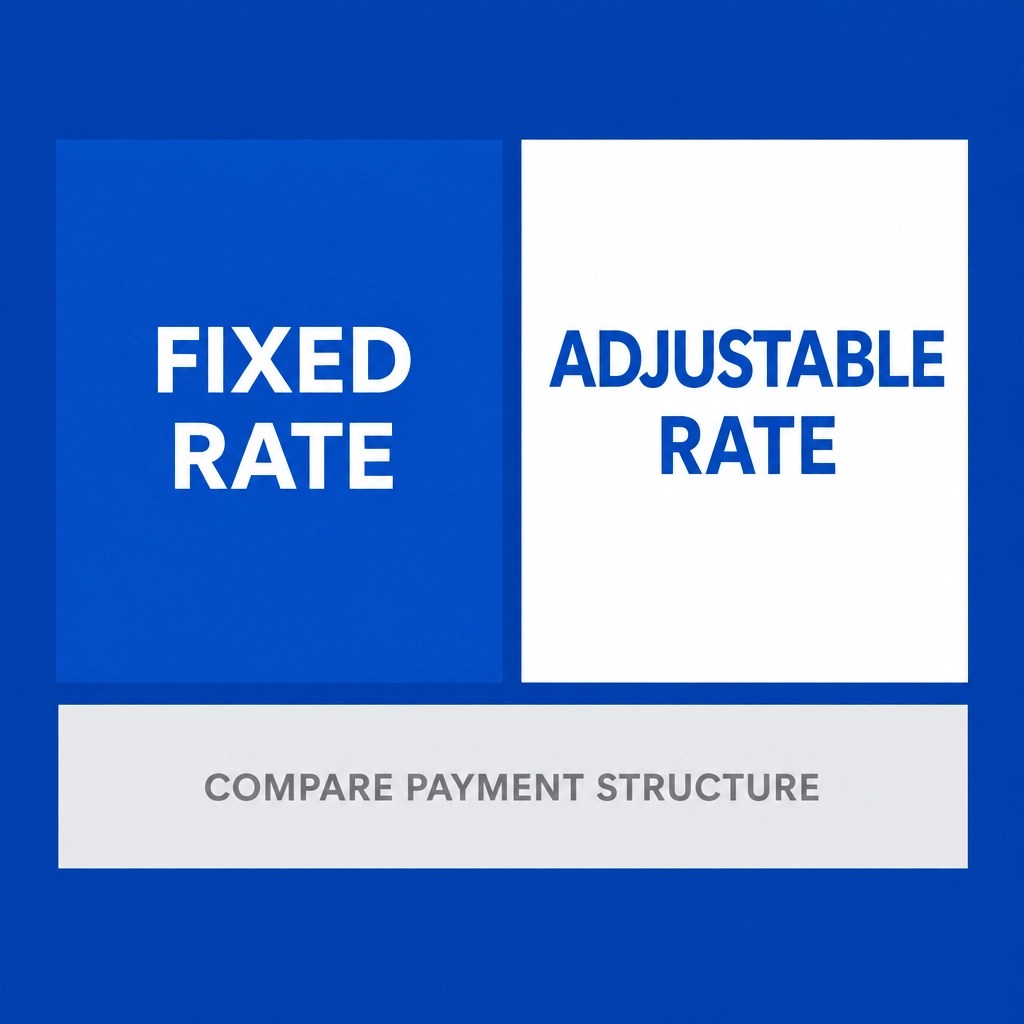
A loan program and an interest-rate structure are different things. Depending on availability and eligibility, you may be able to compare a fixed-rate mortgage with an adjustable-rate mortgage, or ARM.
- Fixed rate: The interest rate stays the same for the loan term, keeping the principal-and-interest payment stable.
- ARM: The rate is fixed for an initial period and may adjust afterward according to the loan terms. The payment can change when the rate adjusts.
Ask how the initial rate period, adjustment schedule, caps, and potential future payment work. A lower starting rate doesn’t necessarily mean a lower total cost. Consider how long you expect to keep the home and how comfortable you are with the possibility of payment changes.
4. Understand the rate-lock terms
A rate quote isn’t always a rate lock. Ask whether the rate is locked, how long the lock lasts, and what happens if your closing date changes.
It’s useful to understand:
- The lock’s expiration date and any extension costs.
- Whether the lender offers a float-down option, and what conditions apply.
- Whether changes to your loan, down payment, or property could affect the terms.
These details can help you plan, but a lender can explain which terms apply to your specific loan. Compare lock periods and assumptions when you review offers from more than one lender.
5. Compare the full cost, not only the interest rate
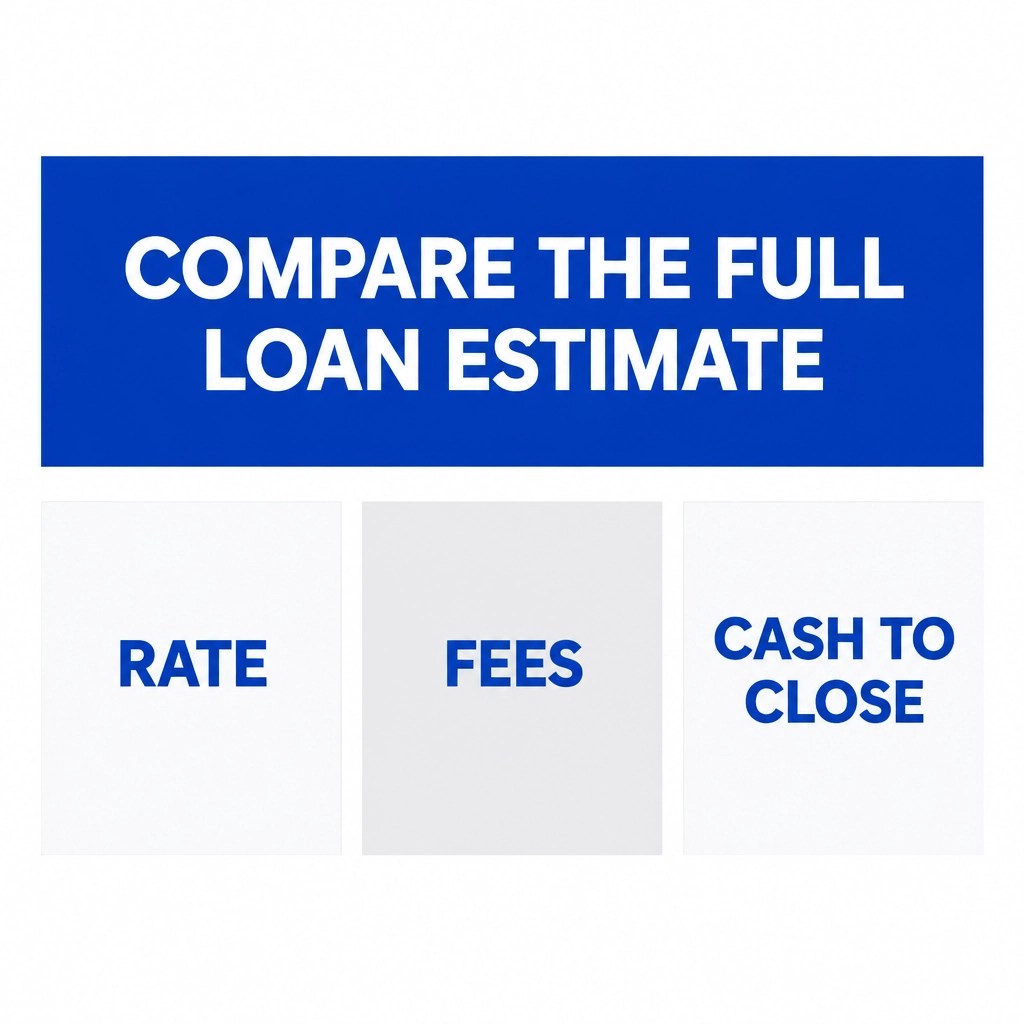
A low advertised rate may come with points or other costs. A different offer might have a higher rate but lower upfront charges or lender credits. To compare accurately, request written Loan Estimates using the same purchase price, down payment, loan term, and rate-lock assumptions.
Review the loan amount, interest rate, monthly payment, mortgage insurance, origination charges, lender credits, and cash to close. The Consumer Financial Protection Bureau explains how to compare and negotiate Loan Estimates.
6. Ask what your pre-approval is based on
A pre-approval can help you plan your search and prepare an offer. Ask what the lender has reviewed (such as your income, assets, credit, and debts) and what conditions remain. The term “pre-approval” is not used identically by every lender, and it is not a final loan commitment.
A clear pre-approval should help you understand your likely price range and the estimated payment, not simply the maximum amount you may qualify to borrow. Your comfort with the payment matters too. If you’re still setting a budget, see our guide to how much house you can afford.
When you’re ready to make an offer, ask how quickly the lender can update or issue a letter for a particular property. A well-prepared offer can be helpful, but no pre-approval guarantees financing or determines how a seller will respond.
7. Find out how communication and closing are handled
Ask who will be your main contact and who you can reach if that person is unavailable. Find out how the lender will update you, what response times you can generally expect, and how they communicate important deadlines.
You can also ask how the lender coordinates with your real estate agent, settlement company, and other parties involved in the transaction. A lender cannot control every part of a closing, but clear communication can help you understand what is needed and flag issues sooner.
8. Check licensing and reputation
Before sharing financial documents, confirm that the lender and loan officer are authorized to work in Virginia. You can search the NMLS Consumer Access database.
Reviews may help you understand how other borrowers describe their experience, especially around communication and follow-through. Read them as one source of information, not a guarantee that your experience will be the same. You can also ask the lender how they handle questions or changes during the loan process.
9. Ask about experience with your property and transaction
A detached home, condo, new construction, and investment property can each raise different questions. If you’re buying a condo, ask about experience reviewing association documents. If you’re purchasing from a builder, ask how the lender coordinates with the builder’s timeline and what happens if construction or settlement dates shift.
If you’re a repeat buyer, selling one home while purchasing another, or refinancing, explain the timeline and details early. A lender can then tell you what information they need and which financing approaches may be worth comparing. For homebuyers weighing an offer, our guide to mortgage pre-approval versus pre-qualification covers what to ask about the early review.
10. Choose a lender who helps you evaluate trade-offs
A useful conversation should leave you with a clearer view of your choices. Ask the lender to explain how the options compare in monthly payment, cash to close, rate structure, and longer-term costs. If a recommendation depends on your plans, such as how long you expect to stay in the home, ask how that affects the comparison.
I take a strategy-first approach at the GNB Mortgage division of Great North Bank. I help buyers, homeowners, builders, and real estate professionals review financing options based on the borrower, property, and goals. That can include discussing a loan program alongside a fixed-rate or adjustable-rate structure, where available and appropriate.
If you’re comparing FHA and conventional options, our guide to FHA versus conventional loans outlines some of the differences. Homeowners considering a refinance may also find our guide to common mortgage refinancing mistakes useful.
Keep current market rates in perspective
Freddie Mac reported a national average 30-year fixed mortgage rate of 7.24% for the week ending October 29, 2026. This is a survey benchmark, not a personalized quote. The rate you’re offered may differ based on your credit, loan type, down payment, points, property, and other details. You can check Freddie Mac’s mortgage rate information for updates.
Compare actual written offers using consistent assumptions, and ask whether each rate is locked. That gives you a more useful picture than comparing a personal quote with a national average.
A practical next step
Before choosing a mortgage lender, make a short list of questions about loan options, rate structures, fees, communication, and closing timelines. Compare written Loan Estimates where appropriate, and make sure you understand both the monthly payment and the cash you may need at closing.
If you’d like to discuss your situation, you can start a pre-approval review with Fernando. A conversation can help clarify which options may fit your plans, without committing you to a particular loan.
Leave a Reply