
If you’re self-employed, your tax returns may not show the full picture of the cash flowing through your business. Business expenses and deductions can reduce the income reported for tax purposes. That can make it harder to qualify for a conventional mortgage, even when your bank statements show consistent deposits.
A Non-QM loan may offer another way to document your finances. These programs use alternative methods to assess repayment ability, depending on the loan type and your situation. They are not a shortcut around financial review: documentation, eligibility, and terms still apply.
At the GNB Mortgage division of Great North Bank, I help borrowers explore options including bank statement loans, DSCR loans, and foreign national programs. Here’s how these approaches work and what to consider before choosing one.
What is a Non-QM loan?
“Non-QM” means a mortgage that does not meet the applicable definition of a Qualified Mortgage (QM) under federal rules. Non-QM loans generally fall outside the standard guidelines used for many conventional loans purchased by Fannie Mae or Freddie Mac. They may be funded or sold through other channels, depending on the lender and program.
That does not mean repayment ability is ignored. For most covered consumer mortgages, lenders must still follow applicable requirements to assess whether a borrower can repay. The Consumer Financial Protection Bureau’s Ability-to-Repay and Qualified Mortgage rule explains the general framework.
The key difference is often how income or repayment ability is documented. A Non-QM program may consider bank deposits, rental-property cash flow, or other documentation where a conventional application may rely on tax returns and standard income calculations.
Why tax returns can complicate a self-employed mortgage
Self-employed borrowers often deduct legitimate business expenses. Those deductions can lower taxable income, which may also reduce the income counted in a traditional mortgage review.
That can create a gap between:
- Taxable income: The amount reported after eligible deductions.
- Cash flow: Money coming into and moving through a business or personal account.
- Qualifying income: The amount a lender can use under a particular program’s documentation and underwriting rules.
These figures aren’t interchangeable. A lender needs to review the records and apply the specific program’s method to determine what income may be counted.
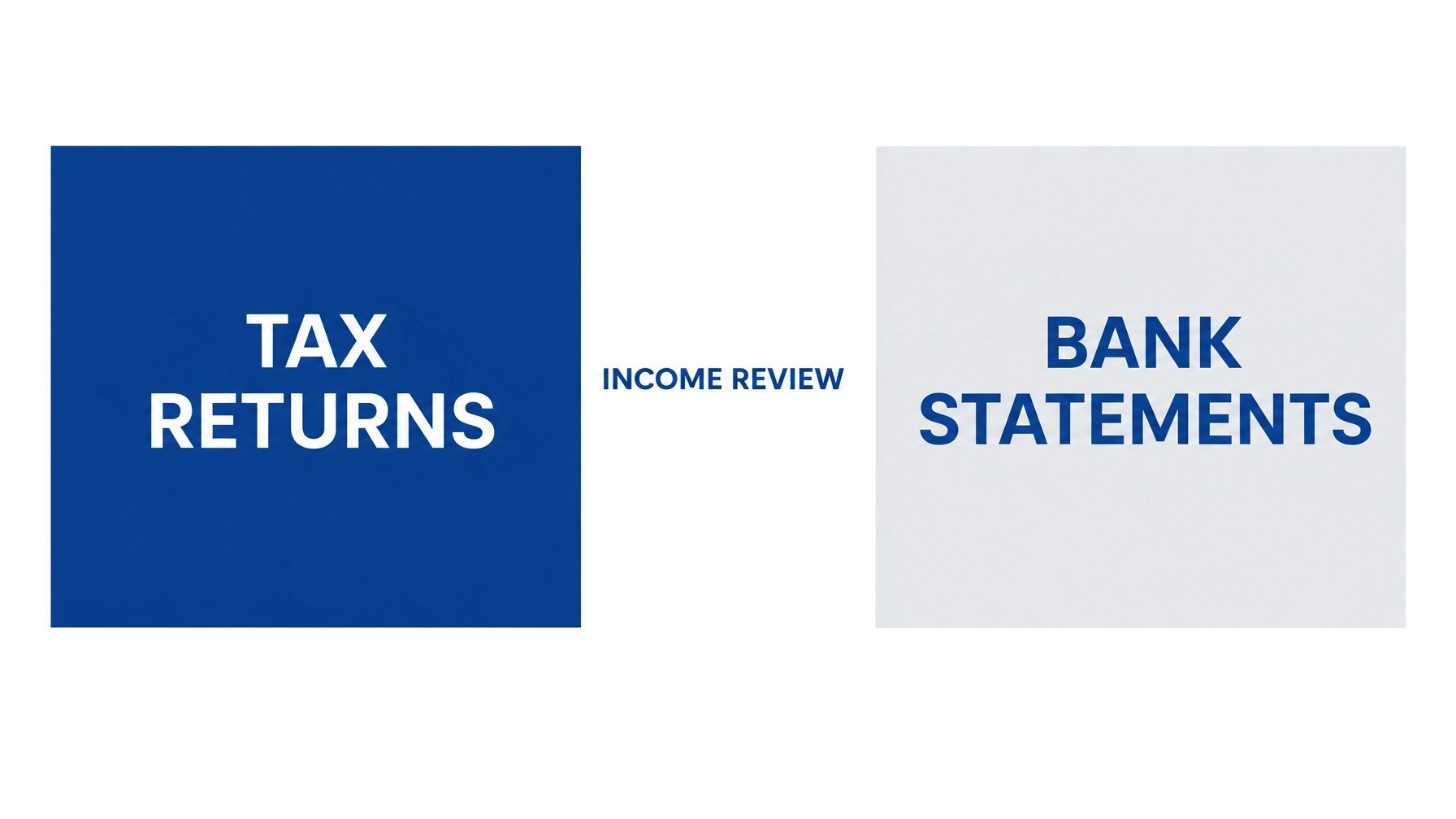
Bank statement loans: using deposits to document income
A bank statement loan is a type of Non-QM mortgage that may use personal or business account statements to evaluate cash flow instead of relying solely on tax returns. Depending on the program, a lender may review a series of recent statements, often 12 or 24 months, and calculate eligible income using the documented deposits and applicable expense assumptions.
Bank statements do not automatically make every deposit qualifying income. The lender may need to understand the source of funds and distinguish business revenue from transfers between accounts, borrowed funds, refunds, or other deposits that may not represent ongoing income. If business statements are used, the review may also account for your ownership share and the business’s expenses.
You may be asked for items such as:
- Recent personal or business bank statements.
- Proof of business ownership or self-employment.
- A business license, website, or other evidence of business activity.
- Explanations for unusual deposits or transfers.
- Additional financial records requested for the specific program.
The exact documentation and income calculation vary by lender and loan. A bank statement program can reduce reliance on tax returns, but it is not a “no-documentation” mortgage.
DSCR loans: qualifying through rental-property cash flow
A DSCR loan, short for debt-service-coverage-ratio loan, is generally designed for real estate investors purchasing or refinancing eligible investment properties. Instead of centering qualification on the borrower’s personal employment income, the review may focus on whether the property’s rental income can support its housing costs.
In simple terms, the lender compares eligible rental income with the property’s qualifying debt payment and related costs. How rent and expenses are calculated, which properties qualify, and what documentation is needed depend on the program.
DSCR financing is not the same as a standard owner-occupied mortgage. Loan purpose and occupancy matter, and not every property or rental scenario will fit. If you’re evaluating a rental purchase, I can help you review whether a DSCR option is available and how its costs compare with other eligible financing.
Foreign national programs
Some Non-QM programs are designed for foreign nationals buying or refinancing eligible U.S. property. Documentation can differ from a standard U.S. borrower’s application. Depending on the program, lenders may request identity and asset records, evidence of income, credit references, or translated documents.
Requirements vary, so it’s helpful to discuss your residency, income sources, property plans, and available records early. I can explain which documents a particular program may require before you decide whether to move forward.
Non-QM compared with conventional loans
Neither option is automatically right for every borrower. The useful comparison is how each program evaluates your situation and what the full cost and terms look like.
| Consideration | Conventional mortgage | Non-QM mortgage |
|---|---|---|
| Income documentation | Often uses tax returns, W-2s, pay statements, and standard underwriting methods | May use bank statements, rental cash flow, or other eligible documentation |
| Potential fit | Borrowers whose income and documentation align with program requirements | Borrowers whose income, assets, or property cash flow may fit an alternative method |
| Pricing and costs | Depends on the borrower, property, loan, and market | May have different rates, fees, down-payment, or reserve requirements; terms vary |
| Program rules | Conventional program and lender guidelines apply | Lender-specific guidelines and eligibility apply |
For context, Freddie Mac’s national 30-year fixed-rate mortgage average was 7.24% for the week ending October 29, 2026. That survey is a broad market benchmark, not a Non-QM quote or a rate estimate for a particular borrower. Actual Non-QM pricing may differ, so compare written offers using the same loan amount, term, rate structure, and cost assumptions. You can review the Freddie Mac mortgage rate survey.
If you’re still weighing your overall home budget, our guide to how much house you can afford can help you think beyond the purchase price. For a general overview of choosing a lender in this area, see 10 things to know when looking for a Northern Virginia mortgage lender.
Fixed-rate or adjustable-rate Non-QM loan?
Some Non-QM products may be available with a fixed rate or an adjustable-rate mortgage (ARM), depending on the specific program.
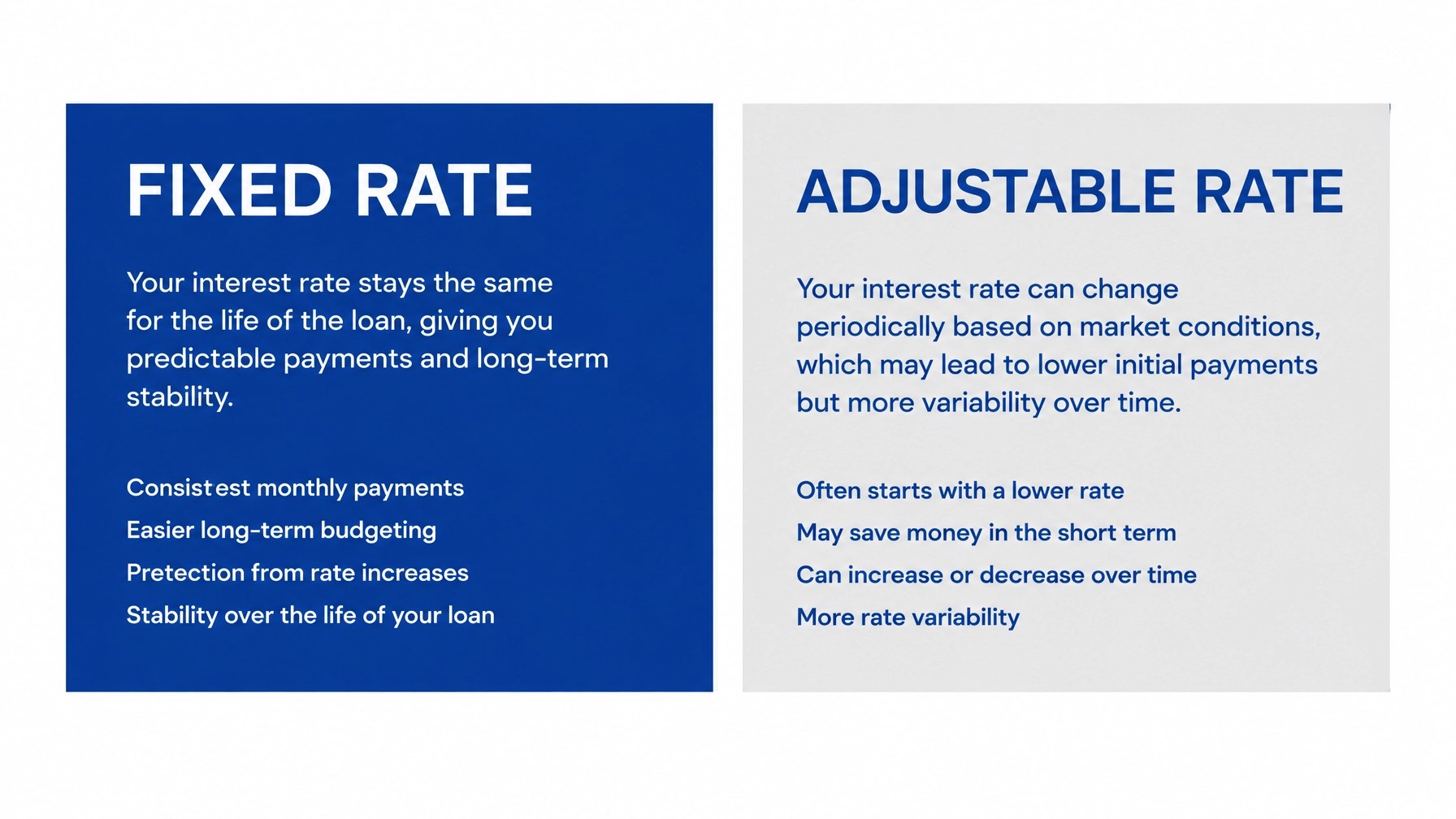
- Fixed rate: The interest rate stays the same for the loan term, so the principal-and-interest payment is generally predictable.
- Adjustable rate: The rate is fixed for an initial period and may adjust later according to the loan terms. Payments can increase after an adjustment.
When comparing an ARM, ask how long the initial rate lasts, when adjustments begin, how often the rate can change, and what caps apply. Consider whether the payment would remain manageable if the rate increased. A plan to refinance or sell later should not be treated as guaranteed.
How to prepare for a Non-QM loan conversation
You don’t need to have every answer before asking questions. Bringing organized records can help make an initial review more useful. Depending on the program, it may help to gather:
- Recent personal and business bank statements.
- A brief description of your business, ownership, and income sources.
- Information about existing debts, assets, and the property you’re considering.
- Rental income or lease information for an investment property.
- Any tax returns or financial statements you have available, even if the program may use another method.
Then ask how the lender will calculate qualifying income or property cash flow, what documentation is still needed, and how the proposed payment and closing costs compare with other options.
Review your options with GNB Mortgage
GNB Mortgage offers Non-QM options for self-employed borrowers, including bank statement loans, DSCR loans, and foreign national programs. Availability and terms depend on the loan, borrower, property, documentation, and current program guidelines.
I help borrowers review the trade-offs rather than assume one loan type is the right answer. You can learn more on our Non-QM loan page or start a pre-approval review. A conversation can help clarify what documentation may fit your situation and what options are worth comparing.
Frequently asked questions
Can I get a mortgage without tax returns if I’m self-employed?
Possibly. Some Non-QM bank statement programs may use account statements to document cash flow instead of relying solely on tax returns. You will still need to provide documentation, and program rules determine how income is calculated.
Is a bank statement loan the same as a no-document loan?
No. Bank statement loans use alternative documentation, but lenders still review financial records and apply program requirements to determine eligibility and repayment ability.
What does DSCR mean in a mortgage?
DSCR stands for debt-service-coverage ratio. In a DSCR mortgage, the lender may evaluate eligible rental income against the property’s qualifying debt payment and costs. The calculation and requirements vary by program.
Are Non-QM loans more expensive than conventional loans?
They may have different rates and fees, and can cost more than some conventional options. The difference depends on the lender, borrower, property, loan structure, and market. Compare written estimates to understand the full cost.
Can a Non-QM loan have a fixed rate or an ARM?
Some Non-QM programs offer fixed-rate and adjustable-rate structures. Availability depends on the product. Review the rate period, future adjustment terms, payment changes, and costs before choosing.
Leave a Reply