Choosing between an FHA loan and a conventional loan is not just a matter of finding the smaller down payment. The right option depends on your credit, savings, monthly budget, loan amount, and how long you expect to keep the mortgage.
For first-time home buyers in Northern Virginia, it is also worth comparing the full cost of each loan. More homes have come onto the market, giving some buyers additional choices and negotiating room. But local conditions vary, and buyers still need to plan carefully for the purchase price and ongoing costs.
I help buyers compare loan options based on their actual circumstances. Here’s a practical overview of how FHA and conventional loans differ.
FHA vs. conventional loans at a glance
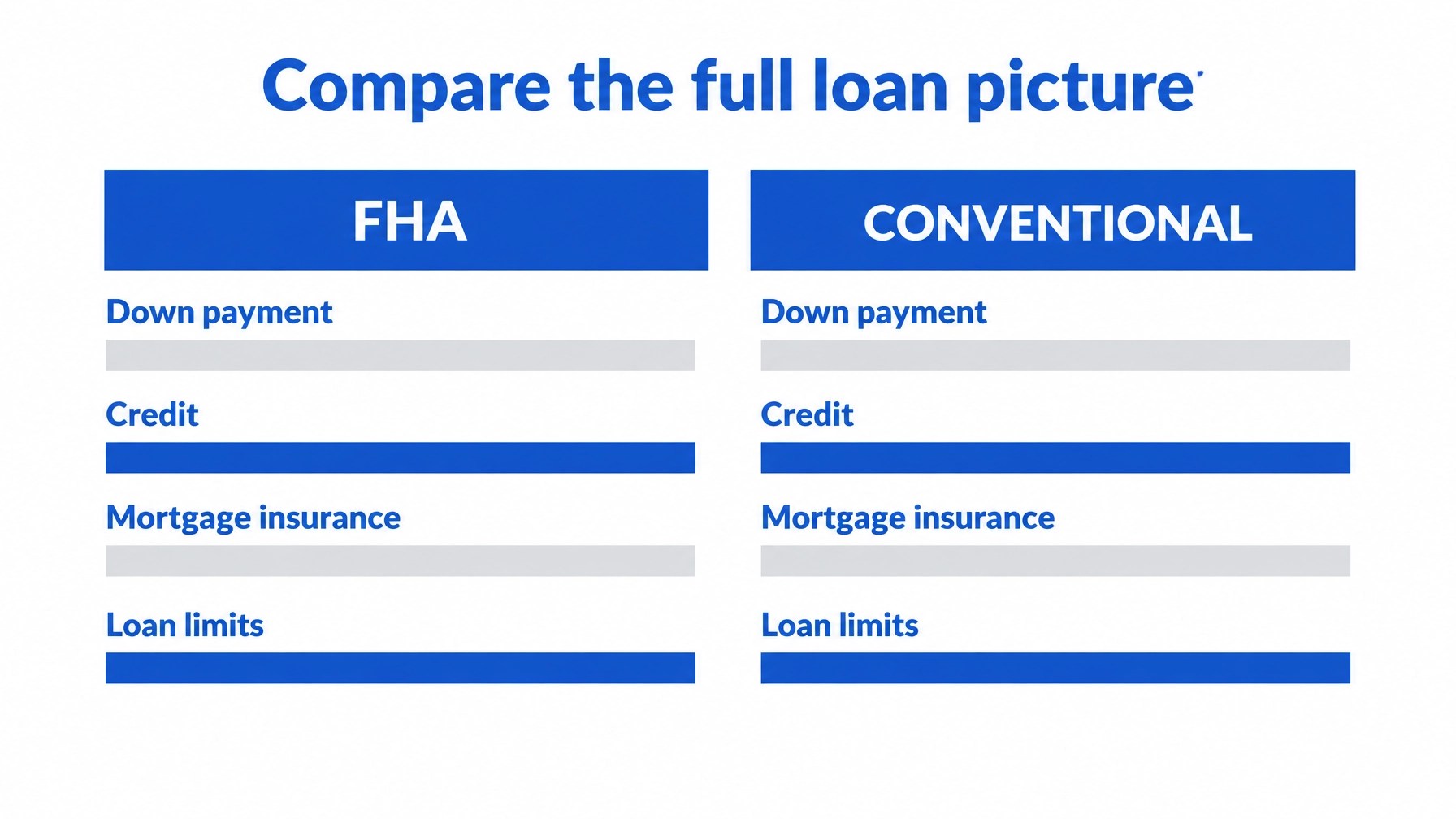
| Feature | FHA loan | Conventional loan |
|---|---|---|
| Minimum down payment | As low as 3.5% for borrowers who meet the applicable credit requirements | Some eligible programs allow as little as 3% down |
| Credit requirements | FHA’s published minimums allow 3.5% down at a qualifying score of 580 or higher; lender requirements may be stricter | Requirements vary by lender and underwriting; stronger credit may help with pricing |
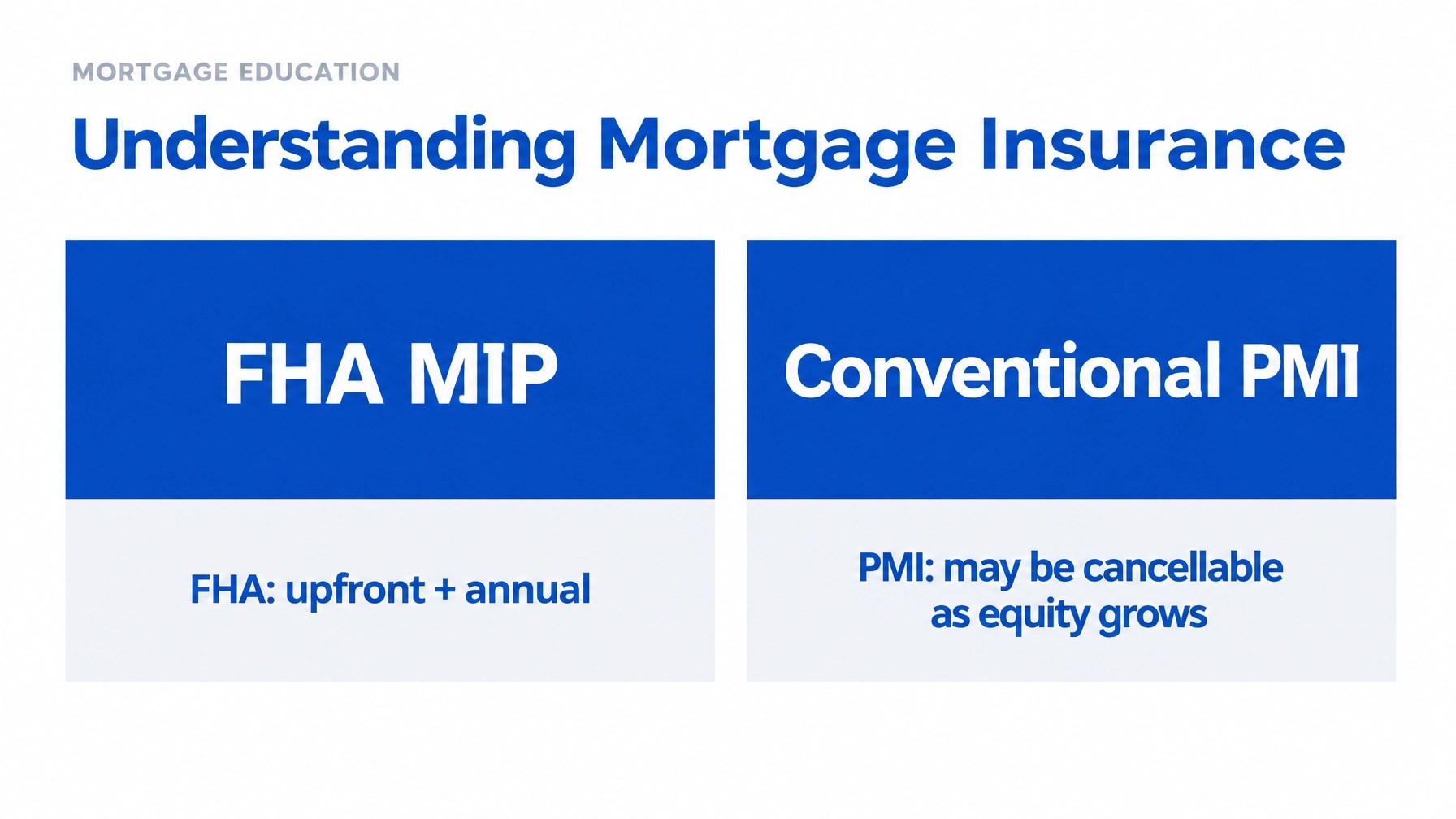
| Mortgage insurance | Upfront and annual mortgage insurance premiums (MIP) generally apply | Private mortgage insurance (PMI) usually applies with less than 20% down; it may be cancellable when you meet equity and other requirements |
| Loan limits | County-specific FHA limits apply | Conforming loan limits apply; higher-balance loans may have different terms |
| Debt-to-income flexibility | Can offer flexibility, subject to underwriting and lender requirements | Depends on the loan program, automated underwriting, and lender requirements |
| Rate structure | Fixed-rate and adjustable-rate options may be available | Fixed-rate and adjustable-rate options may be available |
These are general points, not an approval decision. Program rules, lender requirements, and costs can change based on your application and property.
Down payment: compare more than the minimum
An FHA loan may allow a down payment as low as 3.5% for borrowers who meet the applicable credit requirements. FHA guidelines also permit some borrowers with lower scores to qualify with a larger down payment, though a lender may set stricter standards.
Conventional financing may also allow a down payment as low as 3% through eligible programs. For example, programs such as Fannie Mae HomeReady and Freddie Mac Home Possible have specific eligibility requirements, including income limits.
A smaller down payment may help you buy sooner or keep more savings available. But it also means borrowing more, and mortgage insurance may add to your monthly payment. When comparing options, consider your cash to close, your payment after taxes and insurance, and the savings you would have left after closing.
Credit score and qualification
FHA financing may be worth exploring if your credit history or available funds make conventional financing harder to qualify for. FHA’s published guidelines are more flexible in some respects, but a lender can apply additional requirements. Your income, debts, assets, and the property also factor into the review.
Conventional loans can be a good fit for buyers with stronger credit and a solid overall application. Credit can affect both eligibility and the cost of a conventional loan, including PMI. A specific score alone does not determine whether you will qualify or what terms you may receive.
For either loan type, a lender may review your credit history, employment, income, assets, monthly debts, and the property. If you are early in the process, a mortgage pre-approval can help you understand what a lender has reviewed and what steps remain.
Mortgage insurance: MIP versus PMI
Mortgage insurance protects the lender, not the borrower. It may be required when you put less than 20% down, but the rules differ by loan type.
FHA mortgage insurance (MIP) generally includes an upfront premium and an annual premium paid over time. The upfront premium may be financed into the loan, which increases the amount you owe. Depending on the loan’s original down payment and other terms, annual MIP may remain for the life of the loan or for a set period.
Conventional private mortgage insurance (PMI) generally applies when your down payment is below 20%. Its cost depends on factors such as your credit, down payment, and loan. PMI may be removed when you meet applicable equity and other requirements. This can make conventional financing worth comparing if you expect to build equity or pay down your balance over time.
Don’t compare only the monthly mortgage insurance amount. Look at the total payment and how long insurance may apply. The Consumer Financial Protection Bureau explains how mortgage insurance works.
Loan limits and Northern Virginia home prices
Both FHA and conventional loans have limits, and the applicable amount depends on the property’s county and loan type. For 2026, the one-unit FHA limit ranges from a national floor of $541,287 to a high-cost ceiling of $1,249,125. The baseline conforming limit for a one-unit conventional loan is $832,750, with higher limits in eligible high-cost areas.
Northern Virginia buyers should check the limit for the specific county and property. If your expected loan amount is near a limit, that difference could affect which programs are available and how the financing is structured. See the latest FHA loan limits from HUD and conforming loan limits from Fannie Mae.
Debt-to-income ratio and monthly affordability
Your debt-to-income ratio, or DTI, compares your monthly debt payments with your gross monthly income. It is one part of a lender’s review, alongside credit, assets, income documentation, and other factors.
There is not one DTI limit that applies in the same way to every FHA or conventional borrower. Automated underwriting, the strength of the overall application, and individual lender requirements can all affect the result. A lender can explain how your existing debts and projected housing costs fit into the options you may qualify for.
And approval is only one part of affordability. As you set a home price range, account for property taxes, homeowners insurance, possible mortgage insurance, HOA dues, maintenance, and closing costs. Our guide to how much house you can afford walks through the budget questions to consider.
Fixed-rate or adjustable-rate mortgage?
FHA and conventional describe loan programs; they do not tell you whether the interest rate is fixed or adjustable. Depending on availability and eligibility, either program may offer a fixed-rate mortgage or an adjustable-rate mortgage (ARM).
- Fixed rate: The interest rate stays the same for the loan term, so the principal-and-interest payment is stable.
- ARM: The rate is fixed for an initial period and can adjust later according to the loan terms. The payment may rise or fall after adjustment.
An ARM’s initial rate may be lower than a comparable fixed rate, but that does not guarantee a lower total cost. Compare how long the initial rate lasts, how often it can change, and the limits on future adjustments. Your plans for the home and comfort with payment changes matter.
Which loan may fit your situation?
An FHA loan may be worth considering if your credit profile, down payment, or overall application makes FHA’s guidelines a better fit. Compare the MIP cost and duration with other options so you understand the longer-term payment picture.
A conventional loan may be worth considering if you have stronger credit, meet the requirements for a low-down-payment program, or want to compare PMI that may be cancellable when you meet applicable conditions.
Neither loan type is limited to first-time buyers. And neither is automatically the less expensive choice. The best comparison uses the same home price, down payment, rate-lock period, and loan term for each option, then reviews the estimated payment and cash to close side by side.
Freddie Mac’s national 30-year fixed-rate benchmark was 7.24% for the week ending October 29, 2026. This is a national survey figure, not a personalized quote or a direct FHA-versus-conventional comparison. Your available rate and costs can differ based on your credit, loan amount, down payment, points, and other details. Review current Freddie Mac mortgage-rate information and compare actual loan estimates using consistent assumptions.
A practical next step
The right loan becomes clearer when you compare the complete picture: eligibility, monthly payment, mortgage insurance, cash needed at closing, and rate structure. I can help you review those factors and understand which options may fit your goals.
You can learn more about FHA loans in Northern Virginia or conventional loan options. If you are ready to discuss your own numbers, you can start a pre-approval review with Fernando. A review can help clarify the choices without committing you to a particular loan.
Frequently asked questions
Is an FHA loan better for a first-time home buyer?
It may be a good fit for some first-time buyers, particularly when FHA’s down-payment or credit guidelines fit their circumstances. Conventional options may suit buyers with stronger credit or who want to compare PMI that may be cancellable. Compare total costs rather than choosing by loan name alone.
Can I put 3% down on a conventional loan?
Some conventional programs allow eligible buyers to put as little as 3% down. Eligibility requirements apply, and the costs may include PMI. Ask a lender to compare the available options for your application.
Does FHA mortgage insurance go away?
It depends on the loan’s terms and original down payment. FHA MIP may remain for the life of some loans, while other loans may have a limited MIP period. Ask for the expected duration and compare it with conventional PMI rules.
Can FHA loans have adjustable rates?
FHA financing may be available with fixed-rate or adjustable-rate structures, subject to program availability and eligibility. Compare the adjustment terms and potential payments, not only the starting rate.
Leave a Reply